Is Your Factory Ready for AI? 7 Signs You Are (and 3 Signs You’re Not Yet)
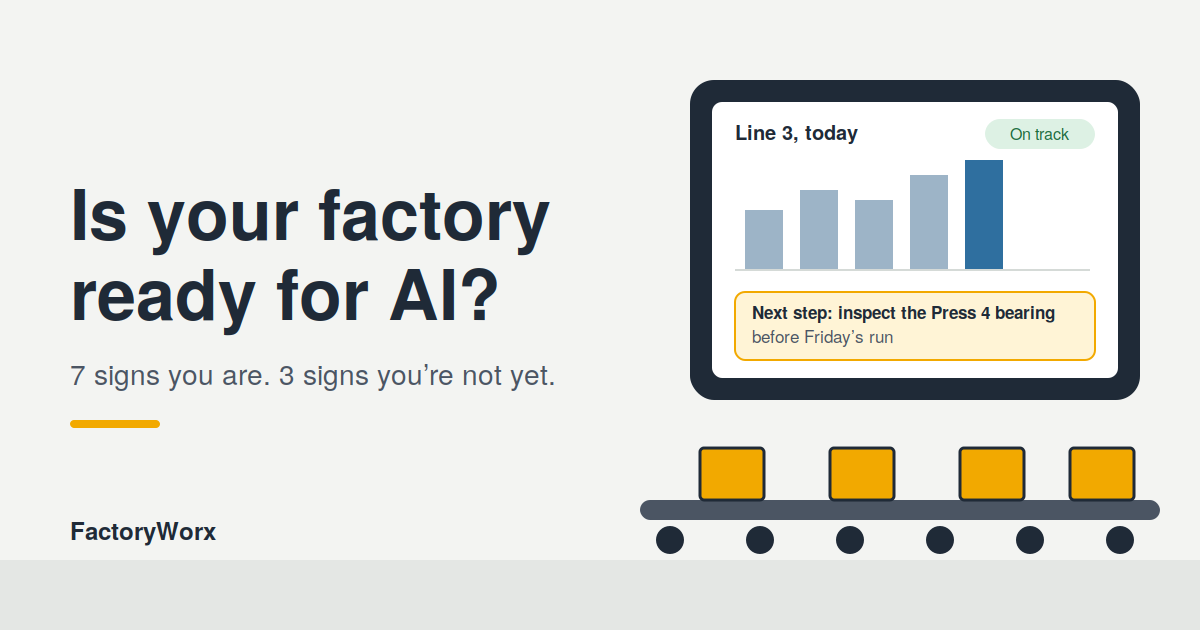
It’s 6:10 a.m. Line 3 is down again. The maintenance lead is on the floor with a flashlight. The planner is rebuilding today’s schedule in a spreadsheet. And upstairs, a director has just asked a fair question: “Should we be doing something with AI?”
You probably know that morning. Everyone talks about AI in manufacturing. Few people tell you whether your plant can use it today.
That’s what this post is for. No hype. Just ten signs, so you can check your own factory in about five minutes.
First, a quick word on what AI needs. It doesn’t need a brand-new plant. It doesn’t need a team of data scientists. It needs a few basics: data it can read, machines that can share what they know, and people who will act on what it says. When those are in place, AI can do more than point at a problem. It can suggest what to do next.
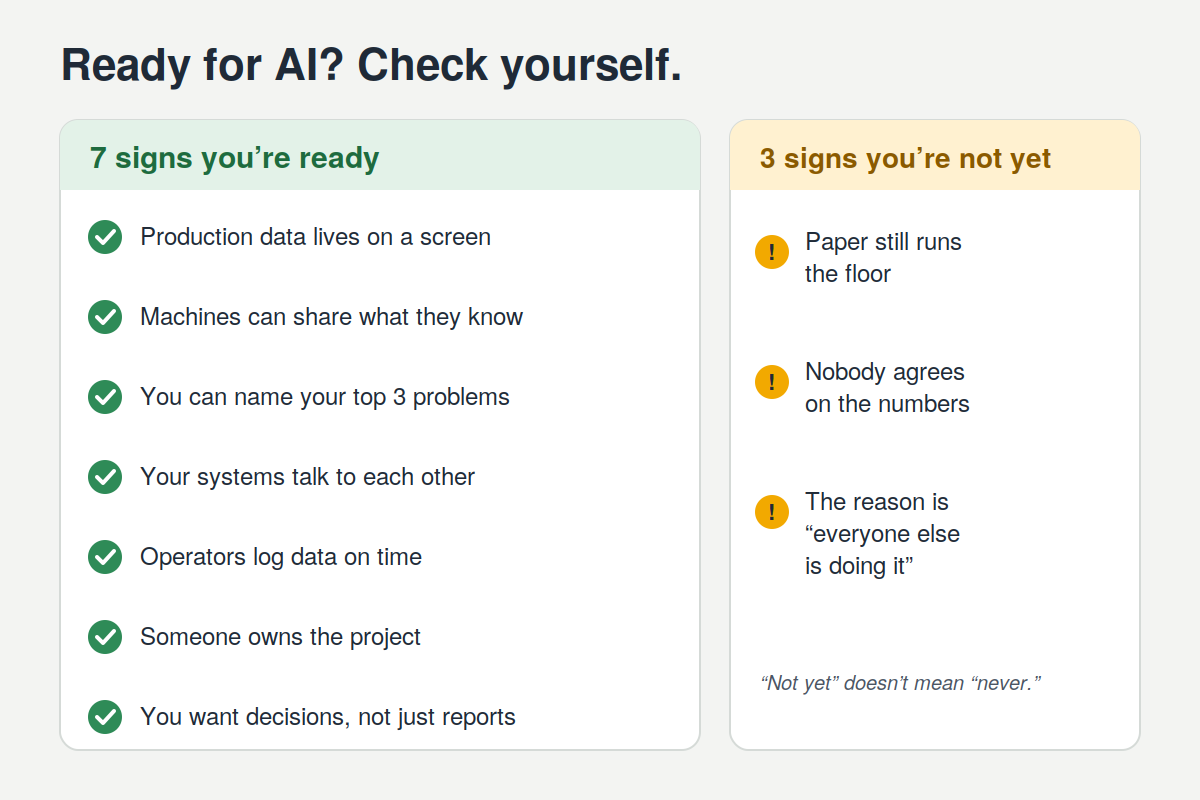
7 signs you’re ready
1. Your production data lives on a screen, not a clipboard
It doesn’t have to be pretty. A spreadsheet counts. An MES counts. What matters is that output, downtime, and scrap get recorded digitally, every day. AI can’t learn from a clipboard that sits in a drawer.
2. Your machines can share what they know
Maybe your newer machines already send data. Maybe your older ones can be fitted with sensors. Either way, the data can get out. A machine that’s a total black box is a gap. But it’s a fixable one.
3. You can name your top three problems, and what they cost
Unplanned stops on the packing line. Scrap on night shift. Late orders every Friday. If you can say what hurts most and roughly what it costs, AI has a clear target. Projects that start with a real problem tend to go better than projects that start with the technology.
4. Your systems talk to each other, at least a little
Your ERP, your production system, and your quality records don’t need a perfect link. But if information can move between them, even with a few manual steps, you’re ahead. AI gets sharper when it sees the whole picture: orders, machines, materials, and people.
5. Your operators log data on time, and trust it
Here’s a simple test. When did the last shift record its downtime reasons? If the answer is “during the shift,” good sign. It means the floor treats data as useful, not as paperwork for the office.
6. Someone owns it
Every project that works has a person who wants it to happen. Maybe that’s the ops manager, the plant manager, or someone in IT. If one person has the time, the authority, and the drive, you’re ready to start.
7. You want decisions, not just reports
You’re tired of dashboards that show what went wrong last week. You want to know what to do about it. Which order to run first. When to service that press. Why scrap jumped on Tuesday. That mindset is what gets real value from AI.
3 signs you’re not yet ready
1. Paper still runs the floor
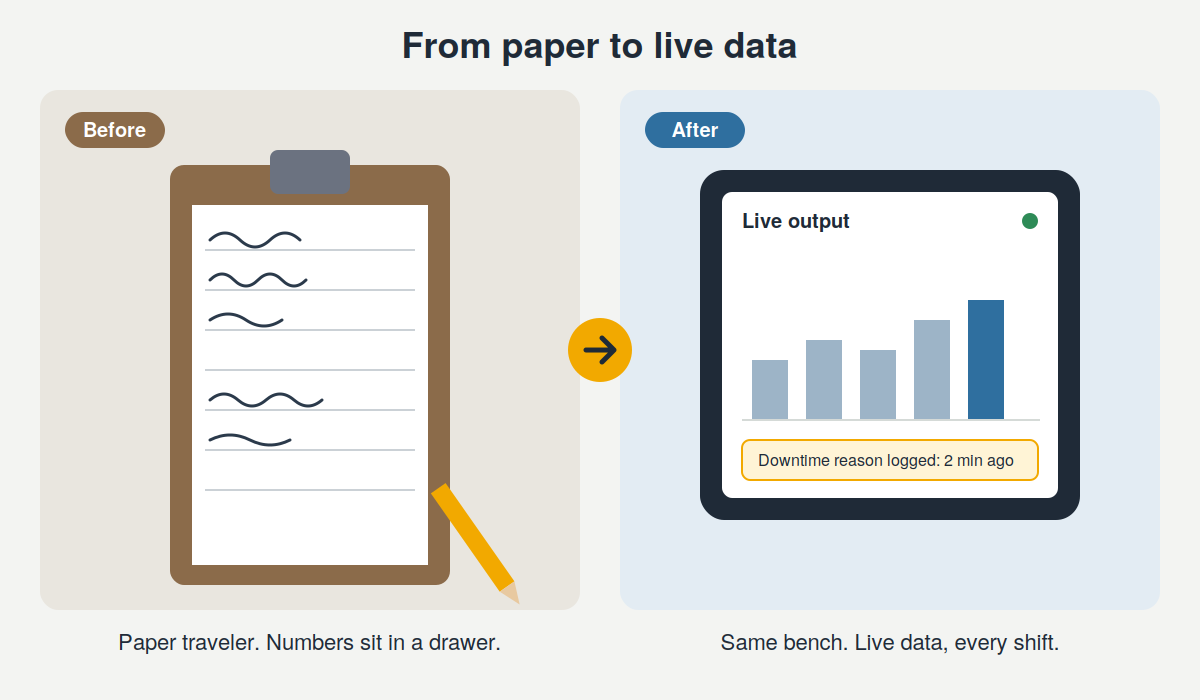
Job travelers. Handwritten checks. A whiteboard schedule. If the real story lives on paper, AI has nothing to read. Going digital comes first. And it pays off on its own: no re-typing, fewer lost sheets, faster answers.
2. Nobody agrees on the numbers
Production says the line ran well. Finance says it didn’t. Two reports, two answers. AI built on shaky numbers gives shaky advice. Agree on the basics first: what counts as downtime, and what counts as good output.
3. The reason for AI is “everyone else is doing it”
If nobody can name the problem you want to solve, wait. Starting with the technology and hunting for a use is how projects stall. Pick the problem first. The tool comes second.
“Not yet” doesn’t mean “never.” Most plants are a mix. Strong data on one line, paper on another. That’s normal. The point is to know where you stand.
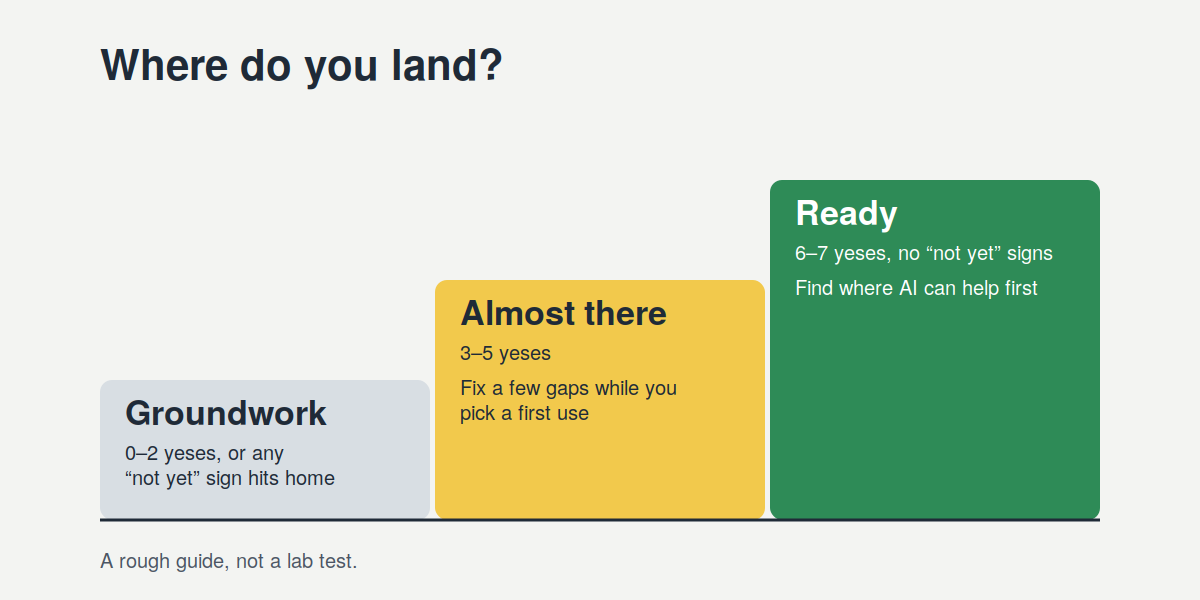
So, how did you do?
Count your yeses on the first seven. Then check the last three. Here’s a rough guide. It’s a quick gut check, not a lab test.
- 6–7 yeses, no “not yet” signs: You’re close. The next step is finding where AI can help first.
- 3–5 yeses: You have a solid base with a few gaps. Fix those while you pick your first use.
- 0–2 yeses, or any “not yet” sign that hits home: Start with groundwork. The good news is that groundwork pays for itself, even before AI shows up.
But a checklist only goes so far. It can’t see your machines, the quality of your data, or how your teams work day to day. For that, you need a closer look.
Find out where your plant really stands
The FactoryWorx AI Readiness Assessment looks at five areas: data, machines and connectivity, processes, people, and goals. You’ll see where you’re strong, where you’re not, and what to fix first. It’s a way to know where you stand before you commit to anything.